
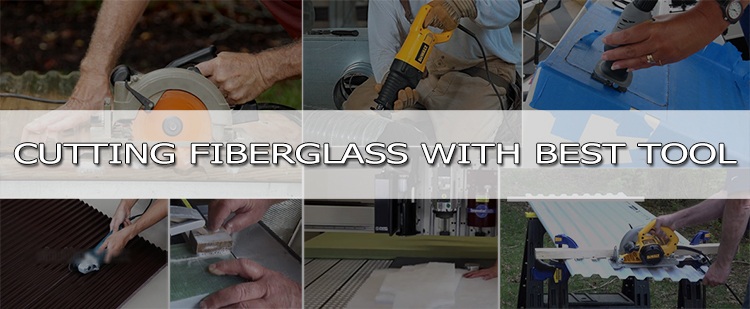
For a curved cut or cutout in a suitable fiberglass-reinforced panel, a jigsaw with a blade expressly intended for that material is often a useful option to investigate. For straight cuts in thin wall panels, check whether the panel manufacturer permits shears before choosing a powered saw.
“Fiberglass” covers very different products. A thin FRP wall sheet, a molded boat component and a structural laminate do not share one cutting procedure. Identify the product, its thickness and the required edge before selecting the tool.
Start with the panel instructions, then choose the tool
For an identified FRP sheet, compare the maker’s permitted cutting methods with the shape you need. Investigate shears for suitable thin panels, a compatible jigsaw setup for curves, or an approved circular-saw setup for long straight cuts.
Do not assume that installing a fiberglass-rated blade makes every saw suitable. The tool must permit the material and accessory, and the cutting setup must include support and appropriate dust control.
| Cut requirement | Option to investigate | Check first |
|---|---|---|
| Straight cut in a suitable thin FRP sheet | Permitted manual or powered shears | Thickness, edge quality and shear capacity |
| Curved cut or opening | Jigsaw with an appropriate blade | Tool approval, blade fit and corner requirements |
| Long straight sheet cut | Approved circular-saw setup | Material permission, guide, support and dust control |
| Detailed trimming | Specialist routing or cutting setup | Approved bit, workholding and extraction |
| Structural or unidentified component | Manufacturer or qualified fabrication service | Material, loads, hidden contents and repair requirements |
Identify what you are cutting
Find the product name, installation instructions and safety data sheet before making a shopping list. Note the thickness, any coating or gelcoat, the shape of the part and whether the cut affects a structural or weatherproof component. Do not confuse fiberglass with fiber cement, ordinary plastic sheet or carbon-fiber laminate.
For installed parts, establish what lies behind the proposed cut. Plumbing, wiring, reinforcement and hidden fasteners can change the job. A tool recommendation cannot authorize cutting an unknown tank, boat structure or load-bearing component; obtain appropriate guidance for those situations.
Shears: worth checking for suitable thin panels
Some thin FRP panels permit shearing. Crane Composites recommends electric or manual shears in its GLASBOND installation guidance to avoid dust accumulation. That is useful product-specific advice, rather than permission to use ordinary scissors on every fiberglass laminate.
Check the shear’s capacity and whether it leaves the required edge without distortion. Test a spare piece when the instructions permit. The practical advantage can be less cutting debris to manage, but you still need to handle sharp edges and follow the product’s protective-equipment requirements.
Jigsaw: investigate for curves and cutouts
A jigsaw can be useful where the required path is curved or an opening needs to be completed. Select a blade specifically rated for the identified material and within the saw’s approved applications. Bosch, for example, lists a T-shank carbide-edge blade for fiberglass and plaster; this does not make every wood blade or every jigsaw equivalent.
Check shank fit, usable cutting length, thickness range and the radius needed. Panel makers may specify rounded inside corners to reduce stress cracking. Follow the actual installation drawing, including clearances, instead of cutting a sharp rectangular corner and assuming trim will resolve it.
Circular saw: a straight-cut option only when approved
Crane’s standard FRP installation guide lists a circular saw with a fine-tooth carbide-tipped blade among its tools. That applies to the identified panel system. Some wood-only circular saw manuals prohibit other materials, so confirm both sides of the setup before choosing this method.
Support the sheet and use an appropriate guide without trapping the blade or losing control of the cut-off. Follow the panel maker’s face-orientation instructions and verify the result on scrap. Do not add water to an ordinary electrical saw to suppress dust; a wet method requires equipment and instructions designed for it.
Routers, cut-off tools and reciprocating saws need a specific reason
Specialist trimming or fabrication may call for another permitted tool and accessory. A router uses a correctly specified bit, not a saw blade. A cut-off tool requires an approved wheel, guard arrangement and operating procedure. Neither should be selected simply because a general list calls it powerful.
For a finished panel opening, do not assume a reciprocating saw will provide the control or edge quality you need. Establish the finish requirement and workholding first. Avoid improvised wheel pressure, unapproved accessories or freehand trimming of an unsecured part. When the instructions do not establish a suitable method, ask the material supplier or a fabrication service.
Plan dust control, support and the test cut together
NIOSH identifies fibrous-glass exposure as a concern for the eyes, skin and lungs. Select controls using the actual material’s safety information and the work being done. A generic “wear a mask” instruction is not a complete dust-control plan, and cutting outdoors alone does not establish adequate control.
Use appropriate capture or another approved lower-dust method where specified, keep debris away from other people and arrange cleanup before starting. Choose protective equipment appropriate to the material and tool; avoid loose clothing around moving parts. If you cannot provide the required control, have the panel cut by a suitable service.
Support the work, mark the finished dimension and test the permitted setup on an offcut. Check the edge, fit and any required expansion clearance. Avoid enlarging a cutout until you have identified whether the problem is measurement, kerf or the installation gap. Finishing or sealing the cut edge must follow the specific product instructions.
Questions readers ask
What is the best all-purpose tool for fiberglass?
There is no single tool for every fiberglass product. Start with the identified material and cut: suitable shears for permitted thin panels, a compatible jigsaw for curves, or an approved straight-cut system.
Can I use a wood-cutting circular saw?
Only when the tool, blade and material instructions permit that application. A material-rated blade alone does not override a wood-only saw’s restrictions.
Can I cut a sharp inside corner in an FRP panel?
Check the panel instructions. Some systems require a radius and specified clearance to help avoid cracking; use the requirements for the actual product.
Does a carbide blade remove the need for dust control?
No. Accessory selection and exposure control are separate parts of the setup. Follow the material safety information and suitable tool instructions.
Choose a complete cutting method
Identify the panel, check its permitted method and confirm the tool and accessory are compatible. Then arrange support, dust control and a scrap test before the finished cut. For an unfamiliar structural laminate or an installed component with unknown contents, get product-specific help first.
Sources and editorial approach
This guide was refreshed in October 2026 using primary sources and original practical analysis. It does not claim hands-on equipment tests. The exact tool and accessory instructions govern their operation.
Crane Composites: standard FRP installation guide
Crane Composites: GLASBOND panel cutting and installation