
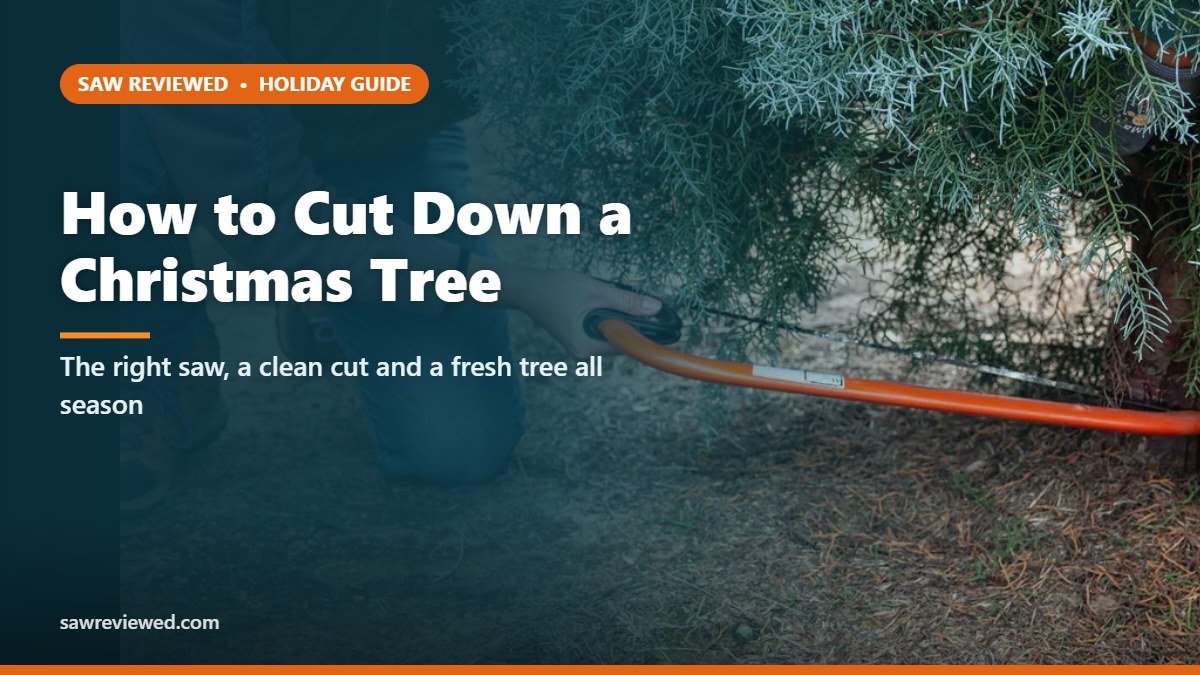
Learning how to cut down a Christmas tree is easier than most people expect, and it turns a holiday chore into a family tradition. Whether you visit a choose-and-cut farm or a national forest with a permit, the right saw and a few simple techniques make the difference between a clean, fresh tree and a torn trunk that dries out by New Year. Here is the complete step-by-step guide, from packing the car to watering the stand.
- A sharp bow saw or folding pruning saw is the best tool for most Christmas tree trunks.
- National forests require a permit and set limits on tree size, stump height and cutting areas.
- Cut low and straight, support the trunk to prevent bark tearing, and protect the tree on the drive home.
- Trim a thin slice off the base at home and water the tree right away.
Where you can cut your own tree
There are two main options. Choose-and-cut farms grow trees for harvest; they usually lend saws, help with netting and charge by height or species. National forests offer a more adventurous experience. According to the USDA Forest Service, most national forests allow personal-use Christmas tree cutting, but you must have a permit and follow rules that vary from forest to forest.
Permits are often sold online through Recreation.gov for a small fee per tree. Typical rules limit trunk diameter, require a low stump, ban cutting near roads, trails, campgrounds and streams, and prohibit cutting the top off a tall tree. Cutting without a permit can bring fines, so read your permit carefully before you go.
Choosing the best saw for the job
When people ask how to cut down a Christmas tree, the tool question comes first. For most trunks, a hand saw is faster, quieter and safer than a chainsaw.
| Saw type | Best for | Pros | Watch out for |
|---|---|---|---|
| Bow saw (21–24 in) | Trunks up to 5–6 inches | Fast, cheap, aggressive teeth | Bulky to carry |
| Folding pruning saw | Smaller trees, hiking in | Light, packs small, very sharp | Shorter stroke on big trunks |
| Japanese pull saw | Clean cuts on small trunks | Thin kerf, smooth finish | Fine teeth can clog with sap |
| Cordless chainsaw | Farms that allow it, large trunks | Very fast | Often not allowed; needs PPE |
A bow saw with a fresh green-wood blade is the classic choice. If you already own a Japanese pull saw, it works well on small trunks but can bind in sappy wood. For help picking a general hand saw, see our guide on how to choose a hand saw.
What to bring
Before you head out, pack the kit below. Knowing how to cut down a Christmas tree means little if you forget the saw or the straps at home.
- A sharp bow saw or folding saw, plus a spare blade
- Work gloves with a good grip
- A tarp or old blanket to drag or carry the tree
- Rope or ratchet straps for the vehicle roof
- A tape measure for ceiling height and permit limits
- Your printed permit, water, snacks and warm layers
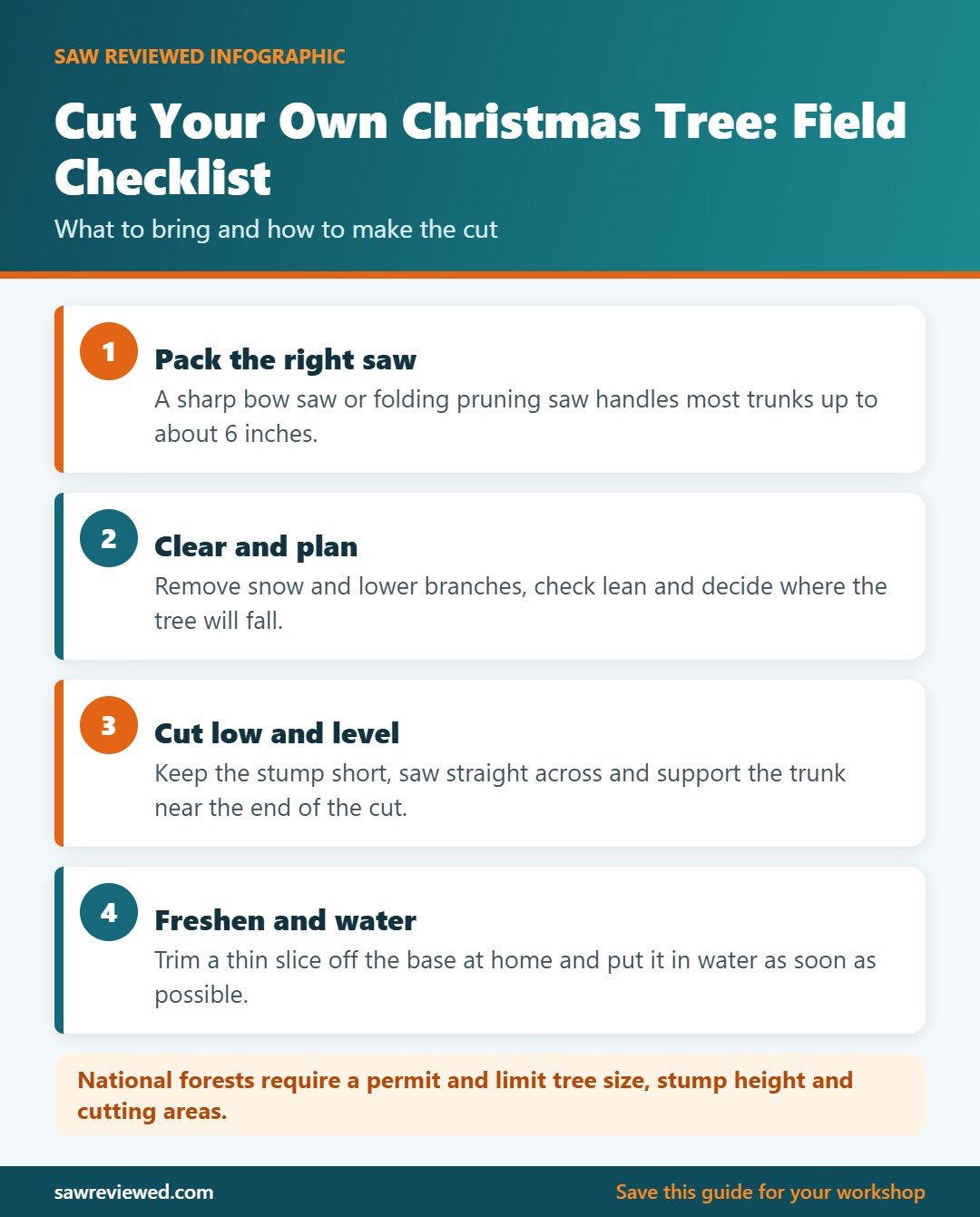
How to cut down a Christmas tree in 8 easy steps
- Measure your room first. Subtract the height of your stand and topper from the ceiling height. Most people choose a tree that is too tall.
- Inspect the tree. Gently shake a branch; a fresh tree loses few green needles. Check for a straight trunk and good shape on all sides.
- Clear the base. Brush away snow and remove a few lower branches so you can see the trunk and saw without fighting needles.
- Plan the fall. Note any lean and make sure the tree will fall away from people, cars and other trees.
- Make a small undercut. On the side the tree will fall toward, saw about a quarter of the way through. This helps prevent bark from tearing.
- Cut from the other side. Saw straight across, slightly above the undercut, keeping the stump low. Let the saw do the work with long, smooth strokes.
- Support the trunk. Have a helper gently push the tree in the fall direction near the end of the cut so the blade does not pinch.
- Carry, do not drag. Dragging rubs off needles and bark. Use a tarp or carry the tree with a partner.
Getting the tree home safely
The last part of how to cut down a Christmas tree is getting it home without broken branches. Wrap or net the tree if possible. Lay it on the roof with the trunk facing forward so wind does not tear branches, and tie it to the roof rack or through the doors, not just the open windows. Drive slowly on the highway and check straps after a few miles.
Keeping your tree fresh after the cut
Once you know how to cut down a Christmas tree, keeping it fresh is the next job. Sap begins to seal the cut end within hours. When you get home, saw a thin, straight slice off the base and put the tree in water quickly. A tree stand should hold plenty of water; check it daily, especially in the first week when trees drink the most.
Keep the tree away from heaters, fireplaces and vents, and turn off lights when you leave the house or go to bed. A well-watered tree is much less likely to dry out and become a fire hazard.
Caring for your saw afterward
After you learn how to cut down a Christmas tree, look after the saw so it is ready next year. Sap and moisture can rust blades and gum up teeth. Wipe the blade with a rag and a little mineral spirits, dry it and apply a light coat of oil before storage. Our guide to saw blade care covers cleaning and sharpening in more detail.
FAQ
What is the best saw for cutting a Christmas tree?
A 21- to 24-inch bow saw with a green-wood blade is the best all-round choice. A folding pruning saw is great for smaller trees and hiking into a forest.
Do I need a permit to cut a tree in a national forest?
Yes. Knowing how to cut down a Christmas tree legally starts with a Forest Service permit, which sets size limits and cutting areas.
How low should I cut the stump?
Cut as low as you safely can. Many permits require a stump no higher than about 6 inches.
How long will a fresh-cut tree last?
With a fresh base cut and daily watering, many species stay fresh for several weeks indoors.
Now you know how to cut down a Christmas tree like a pro: bring a sharp saw, follow your permit, cut low and clean, and get the tree into water fast. Happy holidays from Saw Reviewed.