

Best Tile Saw: Top Wet Tile Saws Reviewed for Clean, Precise Tile Cutting in 2026

When you buy through links on sawreviewed.com, As an Amazon Associate I earn from qualifying purchases.
Best tile saws review – powerful wet tile saw cutting colorful porcelain tiles with water spray, featured on Saw Reviewed power tool guide

Looking for the best tile saw to tackle your next bathroom remodel, kitchen backsplash, or full-floor installation? A quality wet tile saw delivers the smooth, chip-free cuts that separate professional-looking results from frustrating DIY mistakes. Whether you need massive rip capacity for large-format porcelain, portable convenience for weekend projects, or a handheld option for quick trim work, the right wet tile saw makes all the difference in tile installation speed and finish quality.

In this detailed review, we examine six standout models that cover every common scenario: full-size stationary saws for heavy production, compact benchtop units for garage workshops, and a handheld option for quick cuts or tight spaces. Each review is based on real-world performance factors such as cutting capacity, water management, build quality, and ease of transport. We break down the key specifications and practical advantages so you can match the tool to your project size and skill level.

Feature DeWalt D24000S (10") Delta Cruzer (7") Skil 3550-02 (7") Porter-Cable PCE980 (7") Leegol Electric (7") POWERTEC HTS1045 (4.5" Handheld)

Motor Power

1.5 HP peak (15 amp class)
13 amp
Standard high-speed motor
Standard (approx. 7-9 amp class)
Powerful induction motor (up to 3,550 RPM)
12 amp / 1,400 W

Max Rip Capacity

28 inches (with plunge)
26 inches
Up to 18 inches (with extension)
Standard 7″ capacity (approx. 18-24″)
Adjustable fence (standard 18″+)
N/A (handheld – guided freehand)

Bevel Capability

Up to 45°
Tilting head (0°, 22.5°, 45°)
0°, 22.5°, 45°
Yes (adjustable)
0° to 45°
Adjustable bevel (up to 45°)

Water Management

Multiple trays + submersible pump
Splash guard, back tray, filter divider
HydroLock containment system
Splash guard + drain plug
Reservoir cooling system
Adjustable water feed (hose connect)

Key Standout Feature

Precision to 1/32″ over 18″, large tiles
12-bearing rail for ultra-smooth cuts
Minimal overspray & easy cleanup
Rugged stainless deck + onboard miter
Excellent blade cooling & induction motor
Wet/dry, GFCI safety, quick detail cuts

Best For

Professional / large-format / production work
Mid-size pro jobs, smooth straight & angle cuts
Homeowners, clean indoor workshops
Jobsite mobility, durable daily use
Reliable everyday porcelain & stone
Small jobs, trim, edges, tight spaces

Price

This comparison makes it easy to see how the tools differ in scale and purpose. The DeWalt stands out for maximum capacity and accuracy on big tiles. The 7-inch tabletop models (Delta, Skil, Porter-Cable, Leegol) offer great everyday versatility with easier storage and transport. The POWERTEC handheld fills the gap for fast, portable detail work where a full table saw isn’t practical.

Choose based on your most common tile sizes, how often you move the tool, and whether you prioritize massive rip capacity, ultra-clean water containment, or sheer portability. Pair any of these with a high-quality diamond blade suited to your material, and you’ll get professional-grade results on your next project.

Types of Tile Saws: Which One Is Right for Your Project?

The market offers several types of tile saws, each suited to different cutting needs, project sizes, and user experience levels. From compact handheld models for quick detail work to powerful stationary wet tile saws for large-scale installations, choosing the right type ensures clean cuts, less chipping, and efficient workflow on ceramic, porcelain, stone, or paver jobs.

At Saw Reviewed, we break down the main categories of wet tile saws and handheld options so USA homeowners and contractors can pick the best tool for bathroom remodels, kitchen backsplashes, full-floor layouts, or small repairs.

Handheld Tile Saws

Handheld tile saws shine when you need portability and precision for smaller tasks or intricate shaping. These lightweight, corded tools feature diamond blades (often 4-4.5 inches) that allow one-handed operation in tight spaces like shower niches, around fixtures, or for trimming edges.

They excel at:

  • Making freehand cuts on installed tiles
  • Grinding away thinset or old grout during removals
  • Creating custom curves, notches, or bevels on small pieces
  • Quick repairs without dragging out a full table saw

Most models include adjustable water-feed hoses for wet cutting (connecting to a garden faucet) or dry operation when dust control isn’t critical. A GFCI plug adds safety around water. Beginners appreciate the maneuverability, while pros use them as a complement to larger saws for finish work.

Tabletop (Benchtop) Wet Tile Saws

Tabletop wet tile saws—typically 7-inch blade models—are the go-to choice for most home and light commercial projects. These compact units sit on a workbench or sawhorses and feature a water tray or reservoir that keeps the blade continuously cooled.

Key advantages include:

  • Sliding rip fences and miter gauges for straight, repeatable cuts
  • Extensions that support tiles up to 18 inches square or diagonal
  • Rust-resistant aluminum or stainless tops for durability
  • Better water containment systems (like splash guards or HydroLock-style designs) to minimize mess in garages or indoor spaces

They balance portability with solid cutting capacity—perfect for bathroom floors, shower walls, backsplashes, or medium-sized rooms. Many include bevel adjustments (0° to 45°) for angled transitions and chair rails.

Stationary (Full-Size) Wet Tile Saws with Stands

For professional-grade performance on large-format porcelain, natural stone, or full-room installations, stationary wet tile saws (often 10-inch blade models) deliver unmatched capacity and stability. These come with dedicated folding stands that raise the work surface to a comfortable height and include large water pans with recirculating pumps.

Standout features:

  • Extended rip capacity (up to 28+ inches with plunge)
  • Deep cut depths (3+ inches at 90°)
  • Precision rails and stainless rollers for accuracy on long or wide tiles
  • Multiple trays and extensions for handling oversized planks

They’re ideal for high-volume work, big diagonal cuts, or production-level tiling jobs where consistency and power matter most.

DeWalt 10-Inch Wet Tile Saw with Stand – Best Tile Saw for Large-Format Tiles and Professional Use

The DeWalt D24000S stands out as the ultimate best tile saw when you regularly cut big porcelain or stone tiles. This complete package includes the powerful 10-inch corded wet tile saw, a sturdy folding stand, XP4 porcelain blade, submersible pump, full water pan system with side and rear trays, sliding cart extension, angle/rip guides, and both blade and hex wrenches—everything you need for immediate setup.

With 1.5 peak horsepower on standard 120-volt power, the motor powers through thick materials without bogging down. The assembled dimensions (36″ L x 29″ W x 24″ H) and 69-pound weight provide rock-solid stability, yet the compact frame folds easily for truck or van transport.

Cutting capacity impresses: 18″ x 18″ diagonal, 3-1/8″ maximum depth, 28″ rip with plunge feature, and full 45° bevel. Stainless steel rollers and a clear cutline indicator ensure accuracy within 1/32 inch over 18-inch spans—perfect for intricate floor patterns or long hallways. The recirculating water system keeps the blade cool and the workspace cleaner, reducing slurry buildup on large production runs.

If your projects involve large-format tile, frequent bevels, or high-volume work, this wet tile saw with stand is the professional-grade choice that saves time and delivers showroom results every time.

Delta 7-Inch Cruzer Wet Tile/Stone Saw – Best Tile Saw for Smooth, Accurate Daily Cutting

Contractors and serious DIYers praise the Delta Cruzer as one of the smoothest-running tile saw options in the 7-inch class. Its heavy-duty rail system glides on twelve precision bearings, producing straight, effortless cuts through dense natural stone or porcelain pavers.

The 13-amp motor spins at 5,300 RPM and handles 2-3/8″ depth at 90° or 1-1/4″ at 45°. You get 26″ rip capacity, 18″ diagonal square cuts, and tilting head stops at 0°, 22.5°, and 45° for common miter and bevel work. Water management shines with a splash guard, return tray, and slurry filter that extends pump life while keeping the workspace dry.

The durable steel-pipe frame offers excellent stability without excessive weight, making it easy to move between residential jobs or store in a garage. When you want consistent, vibration-free performance on straight rips and angled cuts without the bulk of a 10-inch station, the Delta Cruzer delivers the perfect balance for mid-size tile projects across the USA.
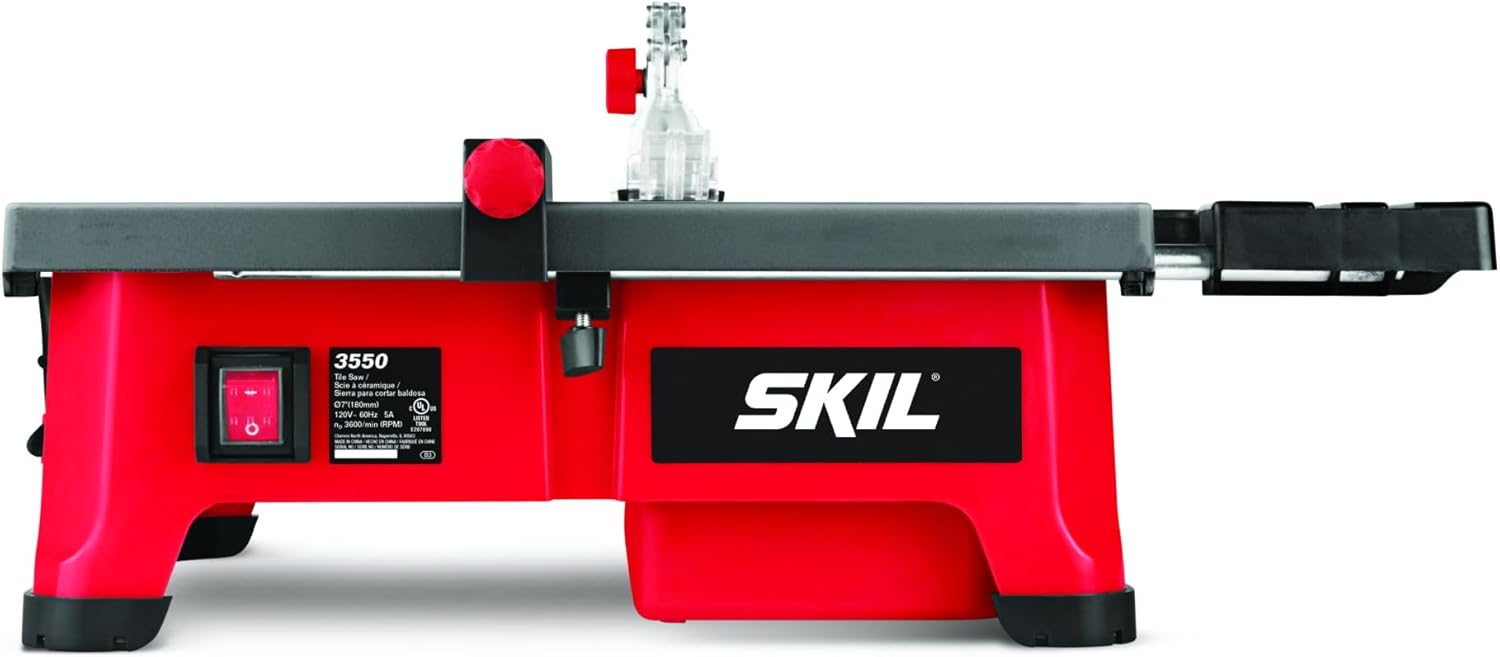
Skil 3550-02 7-Inch Wet Tile Saw with HydroLock – Best Tile Saw for Clean Indoor Workshops

Homeowners love the Skil 3550-02 for its innovative HydroLock water containment system—the cleanest-running tile saw for garage or basement use. This patented design channels water directly around the blade and keeps it on the table, dramatically cutting overspray and cleanup time.

The sliding side extension supports tiles up to 18″ x 18″, while the rust-resistant aluminum tabletop stays flat through repeated use. The adjustable rip fence and miter gauge lock securely for repeatable straight and angled cuts, with bevel options at 0°, 22.5°, and 45°. The high-speed steel blade and corded motor maintain consistent power for everyday ceramic and porcelain jobs.

Because water stays contained, the blade runs cooler longer and the surrounding floor stays drier—ideal for finished spaces where mess matters. If you want a portable tile saw that minimizes water spray while still delivering professional results on shower walls, backsplashes, or small floors, the Skil HydroLock model is a top homeowner favorite.

Porter-Cable PCE980 7-Inch Wet Tile Saw – Best Tile Saw for Jobsite Durability and Mobility

The Porter-Cable PCE980 earns its place among the best tile saw picks for contractors who move between multiple sites daily. The rugged roll cage protects the cutting cart during transport, and the stainless steel fixed deck stands up to water and heavy jobsite abuse.

An onboard miter square simplifies repeatable rip and miter cuts, while the splash guard directs water away from the operator. A convenient drain plug lets you empty the tray quickly into a bucket without mess. The 7-inch blade at 2,850 RPM provides smooth power for standard ceramic, porcelain, and light stone work.

Compact and built tough, this model shines when you need fast setup, reliable durability, and easy transport. For mobile pros handling rough daily use, the Porter-Cable delivers dependable performance that holds up project after project.

Leegol Electric 7-Inch Wet Tile Saw – Best Tile Saw for Everyday Porcelain and Stone Cutting

The Leegol Electric stands out for its excellent blade cooling and user-friendly features, making it a reliable tile saw for mixed home and light commercial work. The dedicated water reservoir keeps the blade continuously cooled, minimizing dust and preventing overheating on longer runs.

Bevel adjustment ranges from 0° to 45°, and the rip fence with miter gauge locks firmly for accurate straight and angled cuts. The powerful induction motor reaches up to 3,550 RPM with plenty of torque for demanding porcelain and denser materials. Lightweight tabletop design allows easy one-person carry while maintaining a stable workspace.

This model performs especially well on projects mixing straight rips with bevels, such as subway tile walls or custom shower niches. The built-in cooling system reduces blade wear and keeps the cutting area cleaner—great for indoor USA home renovations.
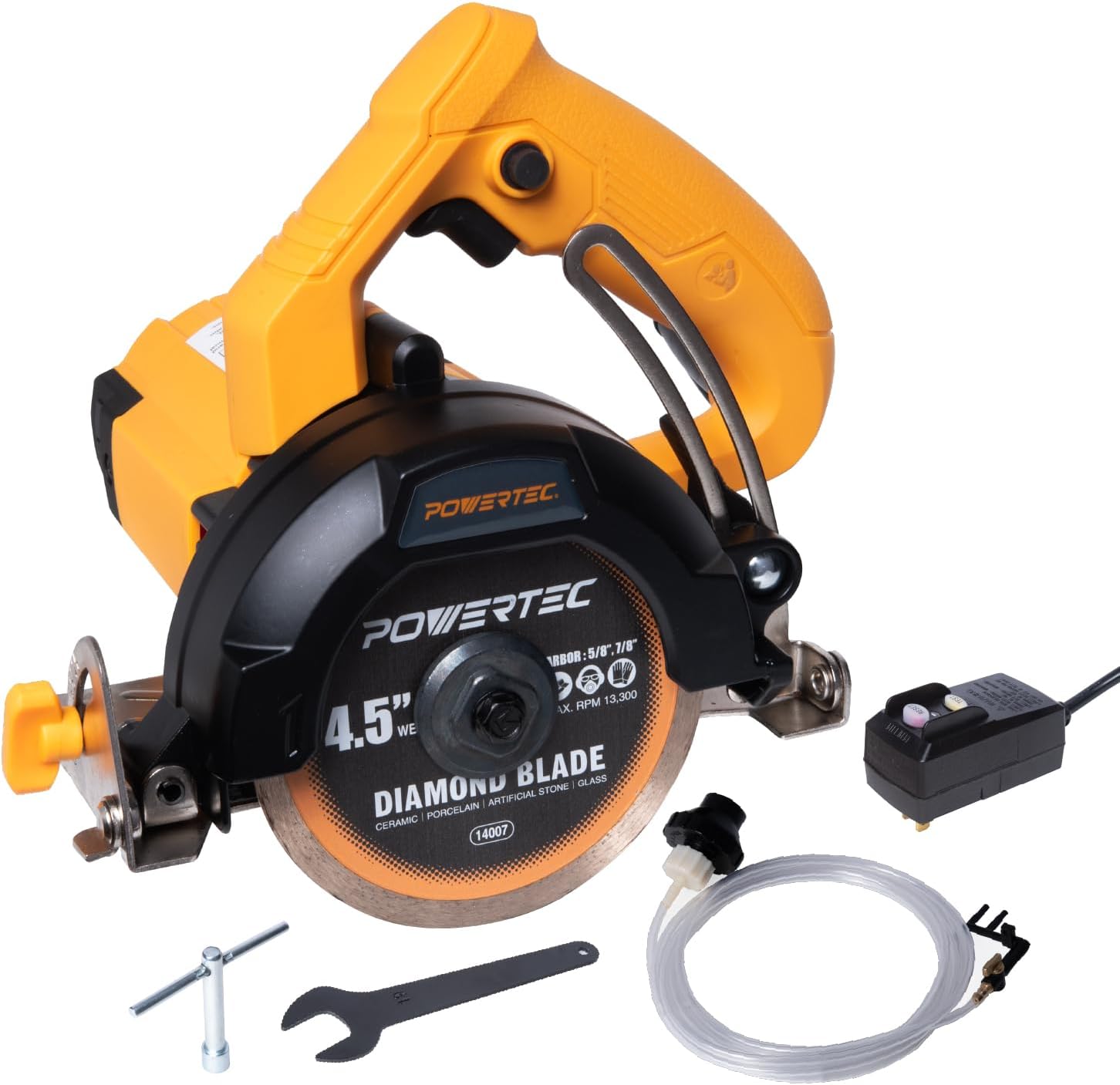
POWERTEC 4.5-Inch Handheld Tile Saw – Best Tile Saw for Quick Trim and Tight Spaces

When full table saws are overkill, the POWERTEC HTS1045 handheld tile saw delivers fast, precise cuts in confined areas. Weighing just 9.5 pounds, it offers one-handed control with a 12-amp/1,400-watt motor reaching 12,000 RPM and a continuous-rim diamond blade.

Maximum depth reaches 1-7/16″, with bevel and depth adjustments for edge work and 45° miters. The adjustable water-feed system connects to any garden hose for wet cutting or runs dry when needed. A GFCI safety plug adds protection around water.

Perfect for finish work, small repairs, decorative borders, or detail cuts on larger installs, this compact handheld fills the gap where bigger saws won’t fit. It’s the go-to portable tile saw for quick jobs around the house or jobsite.

How to Choose the Best Tile Saw: Key Features to Look For in a Wet Tile Saw

Every tiling project requires precise cuts, but not all tile saws handle the job the same way. Some wet tile saws excel at straight rips for basic layouts, while others offer advanced versatility for mitered edges, bevels, and custom shapes in porcelain, ceramic, or natural stone. Picking the right wet tile saw comes down to matching its features to your specific needs—whether you’re a USA homeowner tackling a bathroom remodel or a contractor handling large-format floor installs.

At Saw Reviewed, we focus on the practical features that deliver clean, chip-free results with minimal hassle. Here are the essential things to evaluate when shopping for the tile saw for your next project.

Water Management System

Effective water delivery and containment set great wet tile saws apart from basic models. Most recirculate water from a built-in reservoir or pump tray, cooling the blade, reducing friction, and minimizing dust. Look for adjustable nozzles that direct flow precisely to the cut line—this prevents dry spots that cause chipping on dense porcelain. Advanced systems include splash guards, return trays, and slurry filters to keep the workspace cleaner and extend pump life. Recirculating designs save water on longer jobs, while models with good containment (like HydroLock-style setups) reduce overspray in garages or indoor spaces. A quick-drain plug or easy-empty tray makes cleanup faster after big sessions.

Motor Power and Performance

The motor is the heart of any tile saw, providing the torque needed for smooth cuts through tough materials. Aim for at least 1 horsepower (or 10-13 amps) in tabletop models—higher ratings handle thick porcelain or stone without bogging down or overheating. Continuous-duty motors outperform peak-rated ones for all-day use. RPM matters too: 3,000–5,000+ RPM ensures clean edges on hard tiles. Overload protection (thermal cutoffs) safeguards the motor from burnout during extended runs, especially important with direct-drive systems.

Blade Size and Cutting Capacity

Blade diameter directly impacts depth and tile size handling. Common options include:

  • 4.5-inch handheld blades for quick trim work and edges (up to about 1-1/2″ depth).
  • 7-inch tabletop blades for most home and mid-size jobs (typically 2-2.5″ depth at 90°, supporting 18″ tiles with extensions).
  • 10-inch stationary blades for large-format and production cutting (3″+ depth, 18″+ diagonal capacity).

Larger blades tackle thicker materials and bigger tiles, but smaller ones offer better portability. Check maximum rip capacity (straight cuts along the length) and diagonal cut size—essential for square or rectangular layouts. Plunge features on some models extend rip length for oversized porcelain planks.

Bevel and Miter Adjustments

Many tile projects need angled cuts for corners, transitions, or decorative borders. Look for adjustable bevel capability (0° to 45°, with stops at 22.5° for common angles) and reliable miter gauges or onboard squares for repeatable miters. Tilting heads or adjustable fences make these cuts easier and more accurate. Versatile tile saws with these features save time on complex installations like shower niches or chair rails.

Portability, Build Quality, and Stability

Consider how you’ll move and store the tool. Lightweight tabletop models (under 50 lbs) suit garage workshops, while heavier units with folding stands offer better stability for pros. Rugged frames, stainless steel decks, and roll cages protect against jobsite knocks and water exposure. Sliding extensions and rip fences should lock securely for straight, repeatable cuts. Precision rails (like multi-bearing systems) reduce vibration for smoother operation on dense tiles.

Additional Safety and Convenience Features

Prioritize built-in safety like GFCI plugs on handhelds (for water-related protection) and blade guards to shield operators. Adjustable depth stops help control cut precision, and easy-access wrenches speed blade changes. Durable construction pays off—cheaper models with weak motors or small reservoirs wear out faster and struggle with demanding jobs.

Handheld vs. Tabletop/Stationary Tile Saws: Quick Comparison

Dust & Water Control

Both handheld and tabletop/stationary models benefit from wet cutting to reduce airborne dust. Always wear a dust mask on dry cuts.

Blade Mounting

Tabletop and stationary saws have the diamond blade mounted below the table surface; tiles slide across it. Handhelds use a side-mounted blade for direct contact grinding or shaping.

Cutting Style

Tabletop/stationary models push tiles through a fixed blade for straight rips. Handhelds move the saw along the tile for freehand or guided cuts.

Best Use

Handhelds for detail, trim, and repairs; tabletop for everyday home projects; stationary for pros and large tiles.

Maximizing Performance from Your Tile Saw

Proper water use is key to long blade life and smooth cuts. Recirculating-pump models draw from a built-in reservoir, filter slurry, and reuse water—ideal for extended sessions without constant refills. Pump-free designs connect to a faucet via a 10-12 foot hose for fresh, clean flow.

Water serves three critical roles:

  • Cools the diamond blade to prevent overheating and warping
  • Lubricates the cut, reducing friction and chipping risk on fragile tiles
  • Suppresses dust, keeping the air cleaner and minimizing slurry mess

Keep the reservoir full, adjust nozzles for even flow, and clean filters regularly for best results.

Frequently Asked Questions

What’s the difference between a regular tile saw and a wet tile saw?

A wet tile saw uses a water system to cool the blade and reduce dust—essential for clean, chip-free cuts on porcelain and stone. Dry tile cutters exist but struggle with harder materials.

What should I look for when buying a wet tile saw?

Focus on cutting capacity (rip and diagonal), motor power, water management, bevel/miter options, portability, build quality (stainless or rust-resistant parts), and overall durability for your typical projects.

How does a wet tile saw actually cut tile?

It grinds rather than slices—high-RPM diamond blades abrade the material smoothly. Continuous water prevents heat buildup, ensuring straight, accurate edges without cracks.

What safety gear do I need for a wet tile saw?

Always wear safety glasses, a dust mask (especially on dry cuts), gloves, and an apron to stay dry. Secure the tile firmly, check blade sharpness, and keep hands clear of the cutting path.

Can a wet tile saw cut materials besides tile?

It depends on the model. Many handle natural stone or pavers with the right diamond blade. Cutting wood, metal, or thicker materials usually requires a dedicated tool—check blade compatibility and motor power first.

Ready to upgrade your tile installation game? The best tile saw above will help you achieve crisp, professional results on every project. Check the full reviews on Saw Reviewed and pick the model that matches your needs for smoother, faster tile work.

Leave a Comment