
Tool battery fire safety is not something most DIYers think about until they read about a garage fire. Lithium-ion packs store a lot of energy in a small space, and when a damaged or counterfeit cell fails it can overheat in a process called thermal runaway. Genuine batteries used correctly are very safe. This guide covers the habits, storage ideas and warning signs that keep your workshop on the safe side.
- Buy genuine, certified packs and use the charger made for them.
- Charge on a hard, non-flammable surface and avoid charging overnight in living areas.
- Retire packs that are swollen, cracked, dropped hard or hot while idle.
- Recycle old batteries with taped terminals instead of throwing them in the trash.
Why tool battery fire safety matters
A typical 20V max 5Ah tool pack holds about 90 watt-hours of energy. That is similar to a laptop battery, and a workshop may have ten or more of them. Most never cause a problem. Fires usually trace back to physical damage, poor-quality cells, incompatible chargers or packs that were modified.
UL’s Fire Safety Research Institute lists handheld power tools among the common household items that use lithium-ion batteries, and the FDNY reminds consumers to buy devices certified by a nationally recognized testing laboratory and to follow manufacturer charging instructions. Good tool battery fire safety is simply about stacking the odds in your favor.
What thermal runaway is
Inside each cell, a thin separator keeps the positive and negative electrodes apart. If that separator is punctured, crushed or degraded by heat, an internal short can form. The short creates heat, the heat breaks down more material, and the reaction feeds itself. That runaway can spread from one cell to the next inside a pack. It can produce intense heat, toxic smoke and flames that are hard to put out.
Tool packs include protection electronics that stop charging at full, cut power when cells get too hot and shut down when voltage drops too low. Those systems are excellent, but they cannot repair a crushed cell or make up for a counterfeit pack with no protection board at all.
10 essential tool battery fire safety rules
- Buy genuine batteries. Cheap knockoffs sold online may skip protection circuits or use low-grade cells. Look for a recognized safety certification mark.
- Use the matching charger. Only charge packs on the charger designed for that platform.
- Charge on a hard surface. A concrete floor, metal shelf or masonry backer is better than a wooden bench covered in sawdust.
- Keep chargers away from dust and debris. Fine sawdust is combustible. Blow off chargers and keep them out of the dust zone.
- Do not charge unattended overnight. Plan charging for when you are home and awake, especially inside the house.
- Let hot packs cool down. After heavy cutting, give a battery a few minutes before charging. Most chargers delay hot packs automatically.
- Never charge a frozen pack. Cold-charging can permanently damage cells. Our cold weather tool batteries guide explains why.
- Retire dropped or damaged packs. A hard fall from a ladder can damage cells you cannot see. Watch closely and retire the pack if anything seems wrong.
- Protect terminals in storage. Loose screws, nails or coins can short exposed contacts. Use battery caps or a dedicated case.
- Recycle, do not trash. Tape terminals and use a drop-off location. Batteries in garbage trucks are a known fire hazard.
Smart storage for a workshop
Good tool battery fire safety includes where your packs live. Store batteries in a cool, dry place away from direct sun, furnaces and heaters. A metal cabinet or open metal shelf near an exit is a practical choice for a garage. Keep the area clear of solvents, rags and sawdust piles.
If you share your shop with pets or kids, store batteries out of reach and away from chew-able cables. Our guide to storing power saws around pets has more ideas. For winter, bring packs inside instead of leaving them in a freezing truck.
Battery adapters, rebuilt packs and modified chargers
Adapters that let one brand’s battery run another brand’s tool are popular. Some are well made, but many bypass parts of the battery communication system. Rebuilt packs with new cells can also save money, but cell matching, spot welding and protection circuits are critical. From a tool battery fire safety point of view, any unofficial modification adds risk and usually voids the warranty.
What to do with a damaged battery
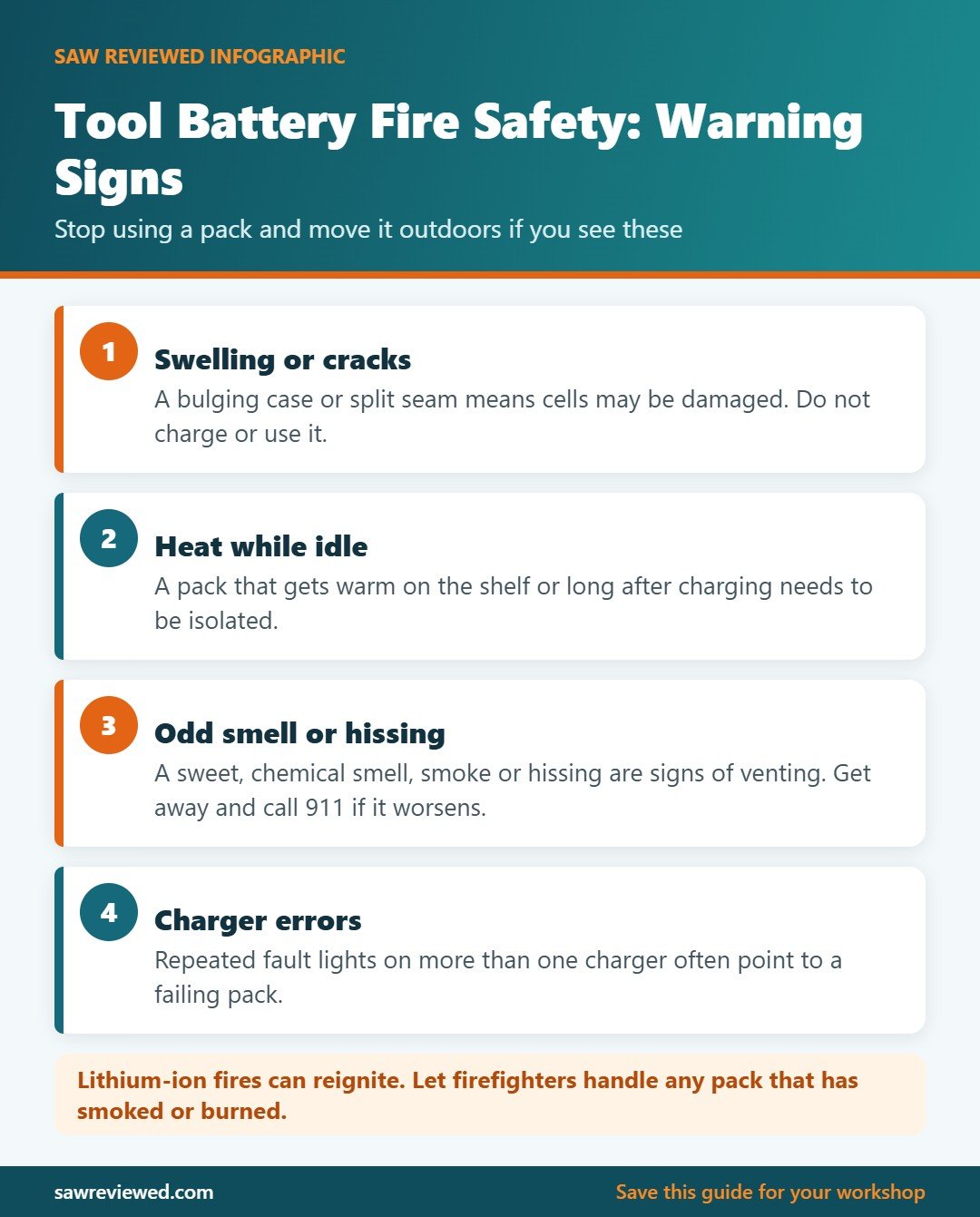
If a pack is swollen, cracked, leaking or hot while idle, stop using it. If it is safe to do so, move it outdoors onto concrete or into a metal bucket of dry sand, away from anything flammable. Do not puncture it, open it or try to charge it again. Contact your local household hazardous waste program or a battery recycler for guidance on damaged packs, since many drop-off bins accept only intact batteries.
For healthy old packs, the Call2Recycle locator lists retail drop-off points across North America. The Power Tool Institute’s Take Charge of Your Battery site also covers safe use and disposal.
A quick tool battery fire safety checklist
| Check | How often | What to look for |
|---|---|---|
| Inspect packs | Monthly | Swelling, cracks, loose parts, corrosion |
| Clean chargers | Monthly | Dust buildup in vents and contacts |
| Test smoke alarms | Monthly | Working alarm in shop or garage |
| Review storage | Seasonally | Cool, dry spot away from heat and solvents |
| Recycle old packs | As needed | Tape terminals and drop off |
FAQ
Is it safe to leave batteries on the charger?
Most tool chargers stop charging when the pack is full, but good tool battery fire safety means removing packs once charged and not leaving them on chargers for days.
Are expensive batteries safer than cheap ones?
Genuine batteries from major brands include protection electronics and quality cells. Very cheap unbranded packs are the biggest risk.
Can I store batteries in my car?
Avoid it. Hot summer cabins and freezing winter nights both stress lithium-ion cells.
Should I throw away a battery that got wet?
Dry it thoroughly before use and inspect it. If it shows corrosion, errors or heat, retire and recycle it.
Tool battery fire safety is mostly common sense: buy genuine packs, charge them where you can see them, keep them away from dust and heat, and retire anything damaged. Those habits protect your tools, your shop and your home.